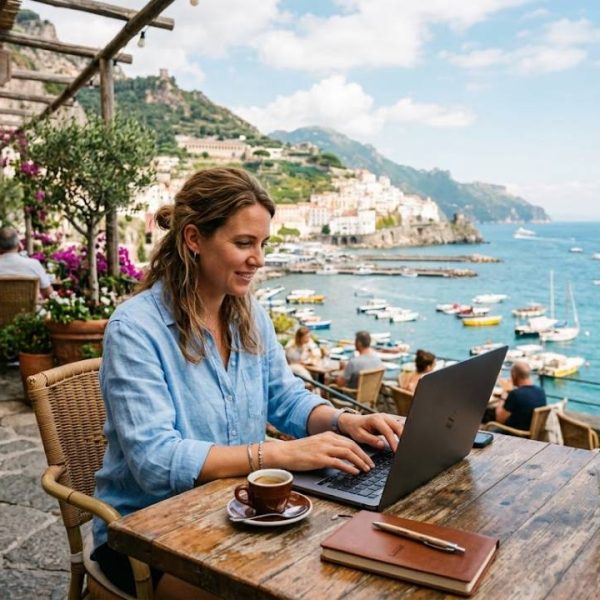
Scroll through any feed about remote work and you will see the familiar images: a laptop on a beach table, a coffee next to a notebook, a view of the sea. Among the designers, coders and marketers living this way, one profession has done it quietly for years before it was fashionable: translators.
Translation was one of the first knowledge jobs that could be done entirely online. Today it offers an interesting look at what location-independent work really involves.
A job that travels well
A translator needs a computer, a reliable connection and deep knowledge of two or more languages. Clients rarely care where the work is done, as long as it arrives on time and reads well. That makes the job naturally portable.
Many translators choose to live in a country where their source language is spoken. A German-to-English translator might base herself in Berlin to stay close to the language, then spend winters in Portugal. A French specialist might split the year between Lyon and Montreal. Living inside a language keeps vocabulary fresh.
The reality behind the photos
The pictures rarely show the deadlines. Translators often work on tight schedules, with documents arriving late on a Friday and due Monday morning. Time zones help and hurt. Working from Asia for European clients can mean late-night calls and early deadlines.
The US Bureau of Labor Statistics notes that many translators are self-employed, which brings freedom along with irregular income, admin work and the constant search for new clients. The lifestyle is real, but it is built on discipline.
The tools that make it possible
What changed most over the past decade is the software. Cloud platforms let translators open a project in a browser, collaborate with reviewers and deliver files without sending large attachments back and forth.
At the heart of many of these setups is translation memory software. It stores every sentence a translator has already translated and suggests it again when a similar sentence appears. For someone translating product manuals, contracts or website updates, that can save hours every week and keep terminology consistent across years of work.
The less time spent retyping, the more time left for the parts of the job that need a human brain.
Specialisation pays
Generalist translators face strong competition, especially with machine translation improving. Those who do best tend to specialise in a language pair and a field. Legal, medical, financial and technical translation remain in demand.
Some freelancers also partner with agencies for larger or certified projects. Clients who need official documents, for example, often look for german to english translation services with a clear quality process and certification, rather than an individual they found online. Freelancers who join such networks get steady work without chasing every client themselves.
That partnership model is exactly what larger buyers look for when deadlines are tight and stakes are high. Instead of vetting individual freelancers, many organisations turn to professional translation services that bundle vetted linguists, editors and project managers under one roof. The freelancer still does the translating, but the client gets guaranteed turnaround times, consistent terminology and a single point of accountability. For nomad translators, joining such networks can mean steadier income without giving up the lifestyle.
Certified work and the limits of freedom
Not every job can be done from a beach. Sworn or certified translations sometimes require stamps, signatures or original paper copies. Immigration files, court documents and university applications may need translations that meet strict formal rules.
That is why many clients who need certified french translation services work with established providers who handle the formal requirements. The individual translator may still be anywhere in the world, but the certification process sits within a structured organisation.
Community on the road
Working alone can be isolating. Digital nomad translators often build community through professional associations, online forums and coworking spaces. Groups like the American Translators Association run webinars and conferences where freelancers share tips, rates and warnings about difficult clients.
Some coworking spaces in cities like Lisbon, Valencia and Tbilisi have informal translator tables, where people working in different language pairs help each other with tricky terms over lunch.
Choosing a base
Translators who have tried the nomad life for several years often settle into a rhythm. They keep one stable base with a good desk, a quiet room and dependable internet, then travel for a few months at a time. Constant movement, they say, is fun for a season but hard on focus. A second monitor, a proper chair and a predictable routine end up mattering more than the view.
What newcomers should know
- Build a reputation in one field before moving abroad.
- Invest in good software and learn it properly.
- Keep a financial buffer for quiet months and late payments.
- Check tax and residency rules in every country you stay in.
- Protect your working hours, even in beautiful places.
The future of location-free language work
AI tools have changed parts of the translation market, particularly for simple content. Yet demand for skilled human translators remains strong where accuracy, tone and accountability matter. For many of them, the ability to live anywhere is one of the profession's quiet advantages.
The beach photos will keep circulating. Behind them are people who combine languages, technology and self-discipline, and who were working remotely long before the rest of us discovered video calls.
The same freedom creates a different kind of client. A freelancer in Lisbon may wake to a German contract, a Spanish birth certificate and a call from a hospital in another time zone. Document work travels well; conversation does not. Clinics, courts and conference organisers therefore book interpreting services through agencies that can place a qualified interpreter on short notice. The laptop follows the translator, but the interpreter must be where the conversation happens.
The US Bureau of Labor Statistics notes that many translators are self- employed, which brings freedom along with irregular income, admin work and the constant search for new clients. The lifestyle is real, but it is built on discipline.